
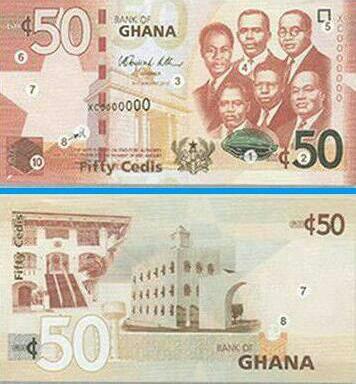
Money bouquets have become a popular gift at weddings, birthdays and graduations in Ghana. Now the Bank of Ghana is warning that making them could land you in trouble.
Seven people were arrested on Monday, October 5, 2026, in a joint operation by the Bank of Ghana and the Ghana Police Service, according to Ameyaw Debrah. They were allegedly making and selling decorative items such as money bouquets and money cakes from cedi notes.
The central bank said the cedi deserves respect as the country's legal tender. "The Ghana cedi is a legal tender of the Republic of Ghana and must be treated with respect. The misuse or abuse of the currency is an offence and may attract sanctions under the law," the Bank of Ghana said, as reported by Ameyaw Debrah.
It warned that "persons found engaging in, aiding, promoting or facilitating such acts will be arrested and prosecuted by the appropriate law enforcement agencies."
The arrests were made under the Currency Act, 1964 (Act 242). Those found guilty could face fines, imprisonment or both, depending on the outcome of prosecution.
Following the arrests, YEN.com.gh published the list of acts the Bank of Ghana treats as improper use of the cedi:
The crackdown follows earlier warnings. Ameyaw Debrah reports that the Bank of Ghana issued a notice on July 14, 2026, banning the use of cedi notes and coins as decorations, including spraying money and turning currency into artistic items.
At the end of September, Governor Dr Johnson Pandit Asiama also urged the public to handle banknotes with care when he announced the new Heritage Series of cedi notes. He specifically asked people to stop using money for bouquets and spraying at events.
Banknotes that are folded, stapled, glued or taped into bouquets often get damaged. Damaged notes wear out faster and have to be replaced, and printing new money costs the country a great deal. Notes that are mutilated or defaced also become harder for machines and cashiers to handle.
With the new Heritage Series notes due to enter circulation on November 3, the Bank of Ghana is keen to protect both the new and existing notes.
Money bouquets, money cakes and "money garlands" have become common across West Africa in recent years, often shared on social media as a sign of generosity or success. Small businesses sell them for celebrations, and some designs use large numbers of notes folded, stapled or glued into shapes. That popularity is exactly what has caught the central bank's attention.
For many Ghanaians, spraying money at weddings and funerals is a long-standing tradition, and money bouquets have become a fashionable gift. The central bank's position means these practices now carry legal risk.
Alternatives include giving cash in envelopes, sending mobile money transfers, or using bouquets built with gift cards, vouchers or printed tokens that do not use real notes. Businesses that make money bouquets may need to rethink their products to avoid breaking the law.
The seven arrests are the clearest sign yet that the Bank of Ghana intends to enforce its rules. How far it goes, and whether prosecutions follow, will be watched closely by event planners, gift sellers and party-goers across the country.
Talk Talk will follow the case and any further guidance from the Bank of Ghana.