
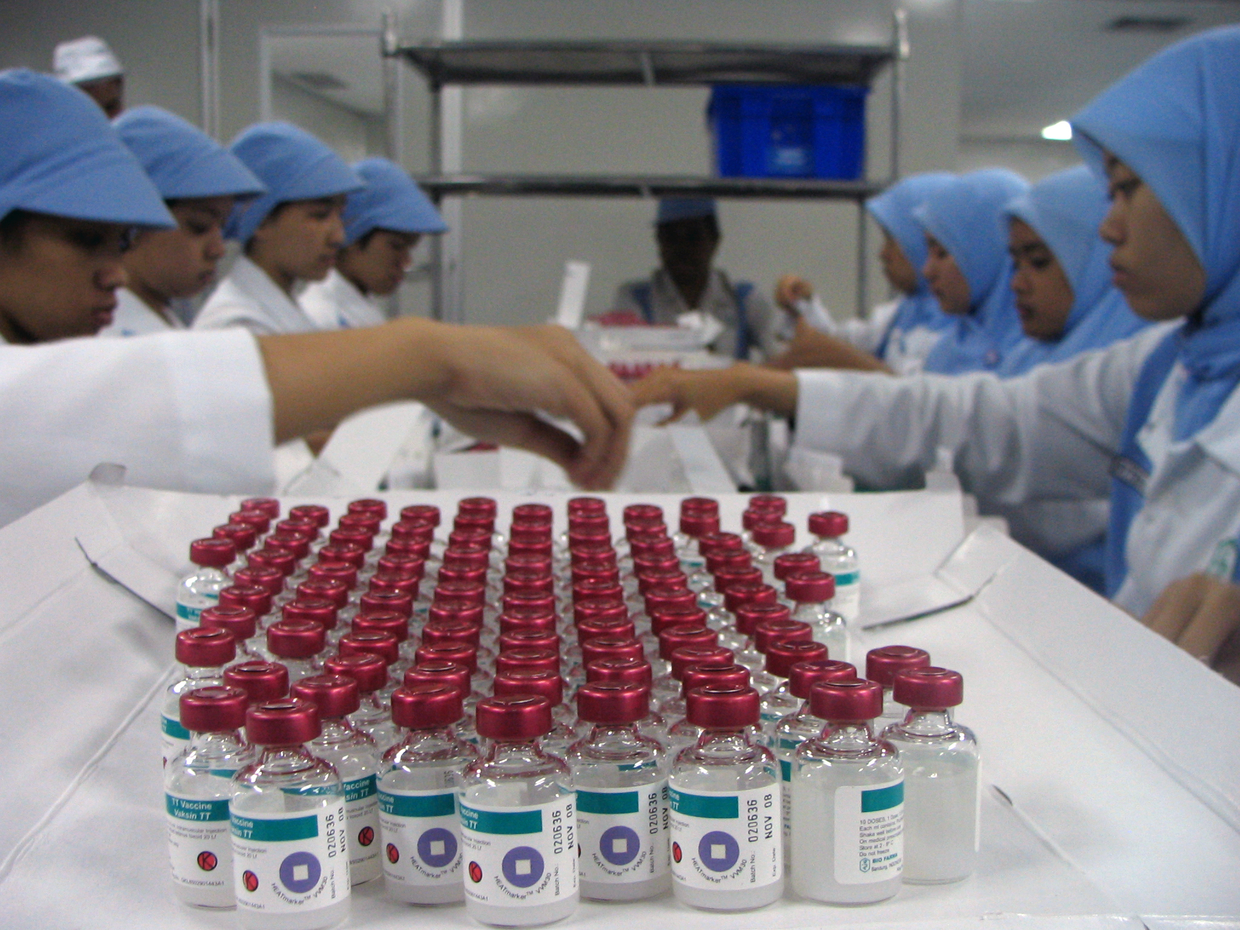
President John Dramani Mahama has announced plans to set up a vaccine production hub in Ghana, as part of efforts to strengthen the country's pharmaceutical industry and cut reliance on imported medical products, according to a report by Citi Newsroom.
The President made the announcement on Sunday, October 18, 2026, when chiefs from the Western North Region paid him a courtesy call.
Mr Mahama pointed to the COVID-19 pandemic as a lesson for Africa. "When vaccines became available, Africa was placed at the end of the queue," he said, according to Citi Newsroom.
"We have learnt a lesson, and we want to produce our own vaccines and medicines," he added.
He also warned that Africa could have suffered far worse outcomes during the pandemic. "If God had not given us immunity that prevented COVID-19 from affecting us severely," he said, the continent might have faced much greater losses while waiting for vaccines.
The President linked the plan to wider initiatives, including what he called "the Accra Reset, which is aimed at achieving health sovereignty," Citi Newsroom reports. He said the push for local production is tied to broader goals of expanding manufacturing, creating jobs and positioning Ghana as a centre for pharmaceutical production.
The announcement did not include the hub's location, partners, timeline or funding, according to Citi Newsroom. Talk Talk will update this story as the government releases more details.
Africa produces only a very small share of the vaccines it uses, and relies heavily on imports for routine immunisation as well as for emergencies. During the COVID-19 pandemic, African countries received vaccines much later than wealthier nations, a gap that health experts and African leaders described as a wake-up call.
Since then, the African Union and its partners have set a goal of producing a much larger share of the continent's vaccines in Africa, and several countries, including Ghana, Rwanda, Senegal and South Africa, have announced plans or projects to build local manufacturing capacity.
Ghana has previously taken steps towards local vaccine production, including setting up a dedicated national body to drive the agenda and signing agreements with international partners. Building a full production industry, however, requires major investment, trained staff, strong regulation and long-term buyers for the vaccines produced.
The Food and Drugs Authority's regulatory standards will also be central, as local vaccines must meet international quality requirements to be used at home and exported to other countries.
Supporters of the plan say local production would also keep more health spending inside the country. Local vaccine production could help Ghana respond faster to future outbreaks, reduce costs over time and create skilled jobs in science and manufacturing. It could also position the country as a supplier to other West African nations.
The President has made "resetting" the economy and public institutions a central theme of his government, and health sovereignty is one of several areas where he has promised to reduce dependence on imports. Earlier this month, during his tour of the Ahafo Region, he highlighted the Free Primary Healthcare programme and the Ghana Medical Trust Fund as key parts of his health agenda.
Western North, whose chiefs were visiting the President when he made the announcement, is one of Ghana's newer regions and a major cocoa-growing area. Chiefs often use such courtesy calls to raise development needs in their areas, and presidents frequently use them to outline national plans.
Health experts and investors will be watching for a detailed plan, including where the hub will be built, who will run it, how it will be funded and which vaccines it will produce first. Those details will show how quickly the government's ambition can become a reality.