
President John Dramani Mahama returned to Ghana on Saturday, October 31, 2026, after attending the Third Russia-Africa Summit in Moscow, according to a report by Citi Newsroom, citing the Ghana News Agency.
The summit, hosted by Russian President Vladimir Putin, took place on October 28 and 29.
Mahama said Ghana has started discussions with Rosatom, Russia's state nuclear corporation, on building the country's first nuclear power plant, the report says. He noted that the Soviet Union gave Ghana a research reactor in 1964.
Ghana has been working towards adding nuclear energy to its power mix for several years, as part of efforts to secure reliable and affordable electricity for homes and industry.
The President invited Russian companies to invest in cocoa, cashew, horticulture, mineral processing and fertiliser production, according to Citi Newsroom. He also proposed using local currencies and digital payment systems to support trade.
He called for a Russia-Africa Digital Innovation and Artificial Intelligence Programme to promote joint research and technology transfer between universities and businesses.
Before travelling, Mahama told the Financial Times Africa Summit he would try to persuade Putin to agree to a ceasefire in Ukraine. At the summit, he called for the peaceful resolution of global conflicts and welcomed Russia's willingness to resume trilateral talks on the Ukraine conflict, Citi Newsroom reports. The report did not say whether he raised a ceasefire directly with Putin.
He also urged stronger international cooperation against terrorism in the Sahel.
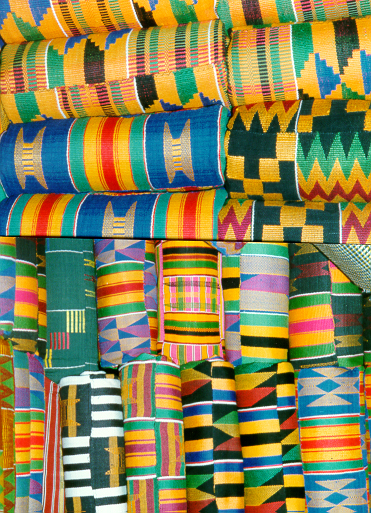
One of the more colourful moments of the trip was Mahama's visit to "Woven Meanings", an exhibition on Ghana's kente cloth at the All-Russian Museum of Decorative Arts in Moscow. The exhibition, part of the summit's cultural programme, features kente designs, a traditional weaving loom of the type still used by artisans in the Kumasi area, and two cloaks, one associated with Kwame Nkrumah and one belonging to Mahama himself, according to Citi Newsroom.
"The strongest and most enduring ties are those between people," Mahama said, according to the report, stressing the importance of cultural understanding in relations between countries.
The museum's director, Tatyana Rybkina, said the exhibition had drawn more than 11,000 visitors in under two weeks.
Mahama received honorary doctorates from the Russian University of Transport and the Peoples' Friendship University of Russia (RUDN), and welcomed RUDN's proposal for a Russian-African studies programme. He also met members of the Ghanaian community in Moscow.
He acknowledged Russia's support for African independence movements and the anti-apartheid struggle, citing his own scholarship to study in the former Soviet Union.
Ghana's relationship with Russia dates back to the independence era, when Kwame Nkrumah's government developed close ties with the Soviet Union. Thousands of Ghanaians have since studied in Soviet and Russian universities, a link Mahama himself reflects.
In recent years, Russia has sought to expand its influence in Africa through trade, energy, education and security partnerships, while African governments have sought to diversify their partners and attract investment.
The report did not mention any agreements signed during the summit. Details of the Rosatom discussions, including costs, financing and timelines, have not been made public. Nuclear plants typically take many years to plan and build, so any project would be a long-term undertaking.
Attention will now turn to whether the talks lead to concrete deals, particularly on nuclear energy and investment, and how Ghana balances its ties with Russia alongside its relationships with Western partners under its "friends to all" foreign policy, which he restated before the trip.