
Award-winning actress Jackie Appiah has called on Ghana's film industry to take lessons from Nollywood, saying the key to its revival lies not only in star actors but in the many jobs that happen behind the camera.
According to Graphic Showbiz, which credited Joy Entertainment as its source, the actress spoke at the Pete Edochie Legacy Project in Accra. She argued that Nigeria's film sector has built a broad production system that supports scriptwriters, camera crews, costume designers and other creatives, and that Ghana can do the same.
Appiah was frank about the state of the local industry. "Of course, the industry has gone. We're not producing at the same volume like we used to produce," she said, according to the report.
She said, however, that she sees gradual signs of recovery and wants more producers and investors to enter the sector. Comparing the two countries, she pointed to the depth of creative talent in Nigeria. "In Nigeria, they have so many scriptwriters," she said, adding: "They have jobs behind the scenes."
Her message to young people was direct. She urged talented creatives not to wait to be discovered. "Don't hide. Look for a producer and share your ideas," she said.
Appiah is one of the few Ghanaian actors with long careers in both Ghana and Nigeria. She rose to fame in the Ghanaian movie boom of the 2000s and went on to appear in many Nigerian productions, winning awards and a large following across the continent. That experience gives weight to her comparison between the two industries.
In the 2000s and early 2010s, Ghana produced a steady stream of English-language and Twi-language films that sold widely on DVD and were shown on local television. Stars from that era became household names in Ghana and Nigeria, and many Ghanaian actors were cast in Nollywood films.
Production slowed in the years that followed. Industry players have pointed to several reasons, including the collapse of the DVD market, piracy, rising production costs, limited cinema screens and a lack of steady financing. Nollywood faced many of the same pressures but grew its output by moving into cinemas, streaming platforms and large-scale television production.
The setting for Appiah's remarks was symbolic. The Pete Edochie Legacy Project brought the veteran Nigerian actor to Accra in late September, with events that celebrated his career and his long relationship with Ghanaian audiences. Edochie, one of Nollywood's most respected figures, has often spoken about his ties to Ghana.
The gathering also brought together actors and filmmakers from both countries, making it a natural place to discuss how the two industries can work together and learn from each other.
Appiah's call comes at a time of renewed activity in Ghana's film space. In recent weeks, Ghanaian productions have reached international streaming platforms, film festivals have announced new editions and industry figures have pushed for funds to support local filmmakers.
Talk Talk has reported on several of these moves, including new film financing efforts and Ghanaian titles reaching global platforms. Still, many in the industry agree with Appiah that the next step is to build a production pipeline big enough to support steady jobs for writers, directors, editors, cinematographers, make-up artists and costume designers.
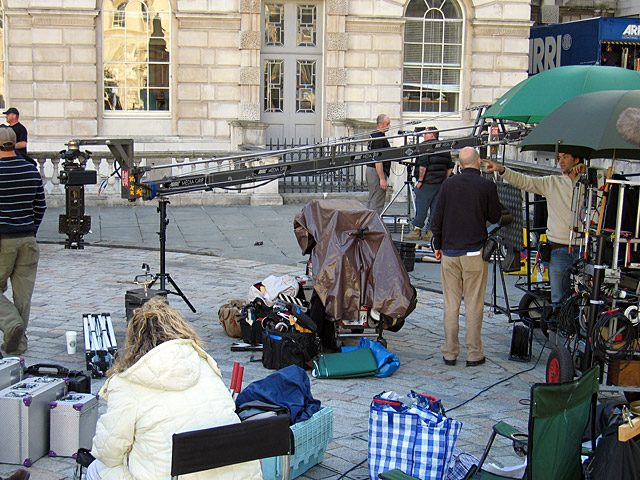
Film industries that last tend to rely on a large workforce beyond the actors on screen. Strong scripts need trained writers. Good-looking productions need skilled camera operators, lighting crews and editors. Period pieces and big stories need costume and set designers.
When those roles are filled by trained local professionals, more films can be made at a higher standard, and the industry becomes less dependent on a small number of stars. That is the point Appiah appears to be making: that Ghana's revival will depend on growing the whole ecosystem, not just the cast list.
Her advice to "look for a producer and share your ideas" speaks to a generation of young Ghanaians who are already making short films, skits and web series on their phones. Many of them have built online audiences without formal training or industry links.
If producers and investors respond to Appiah's call, those young creatives could become the writers, directors and crew members of a new wave of Ghanaian cinema.